
Autoimmune flares and the weather
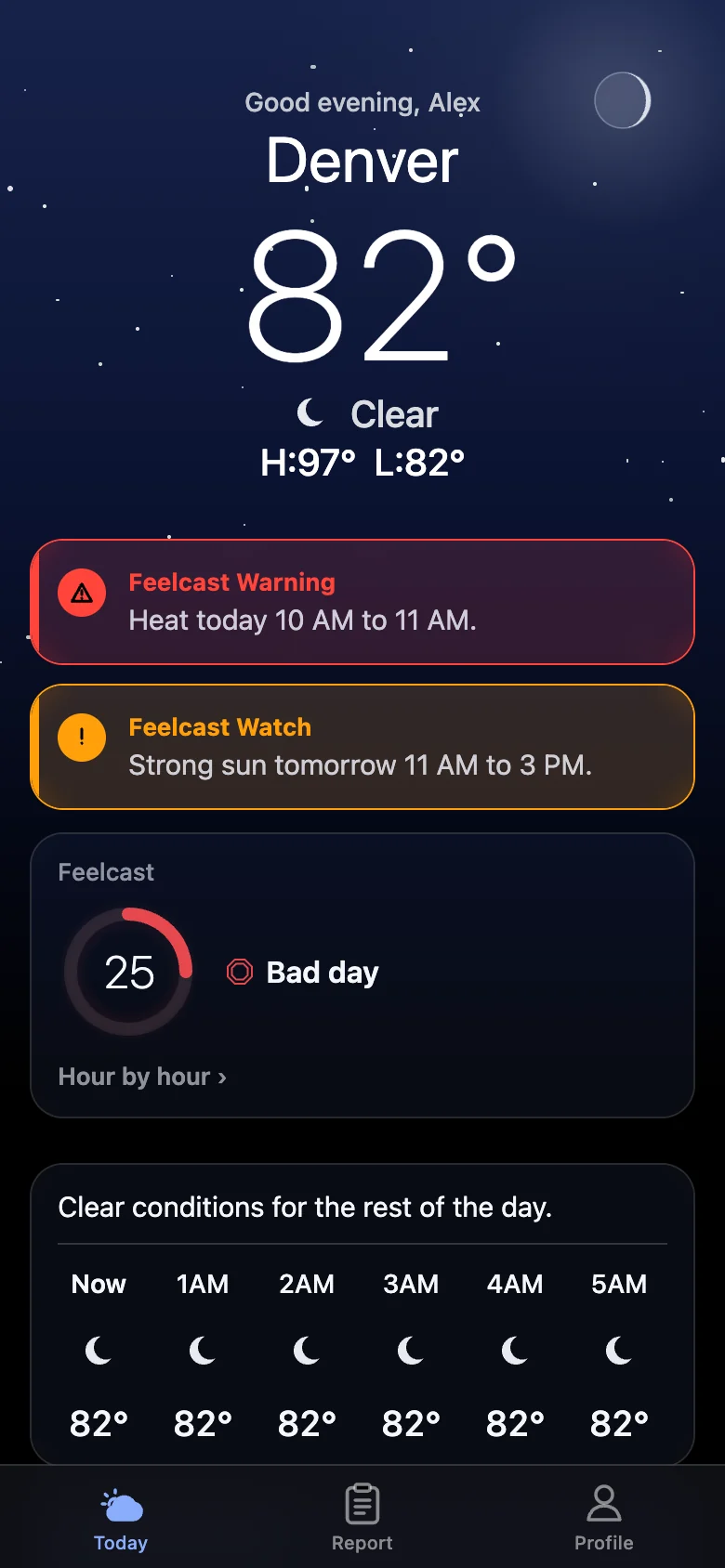
Strong sun, cold, heat and pressure swings can come before flares for some people with autoimmune conditions. Feelcaster tracks each one where you are.
Get early accessWhat Feelcaster watches for autoimmune flares
Strongest first. You choose which triggers apply to you in the app.
Strong sun
High UV that can set off sun-sensitive conditions. Starts to count at: A UV index from 3, strongest at 8 and above.
Cold
Cold air, wind chill and fast drops in temperature. Starts to count at: A feels-like temperature below 50°F, or a drop of 8°F or more within 4 hours.
Heat
Hot afternoons, high feels-like temperatures and warm nights. Starts to count at: A feels-like temperature from 80°F, strongest near 103°F.
Pressure swings
Air pressure rising or falling fast, usually around a passing front or storm. Starts to count at: A swing of about 6 hPa within 3 hours, or a clear shift from the day before.
Damp, humid air
Heavy, humid air, worse when it is windy. Starts to count at: Humidity above 70%.
Air quality
Smoke, smog and fine particles. Starts to count at: A US Air Quality Index above 50, strongest past 100.
One thing to do on those days
On high UV days, cover up and seek shade between 11 and 3.
Autoimmune flares: questions people ask
Which autoimmune conditions does this cover?
Feelcaster doesn’t diagnose anything. You can watch for lupus, Sjögren’s, scleroderma, multiple sclerosis, psoriasis, Hashimoto’s, Crohn’s or colitis and more by name, or choose Autoimmune flares if weather seems to play a part.
How does Feelcaster learn my pattern?
Check in or log how you feel, especially on hard days. Each log keeps the weather from the hours before it, and the Report tab shows what your bad days have in common.
Other conditions

Know before the weather does.
Feelcaster is coming to iPhone and Android. Join early access and we’ll send your invite.