
Allergies and the weather
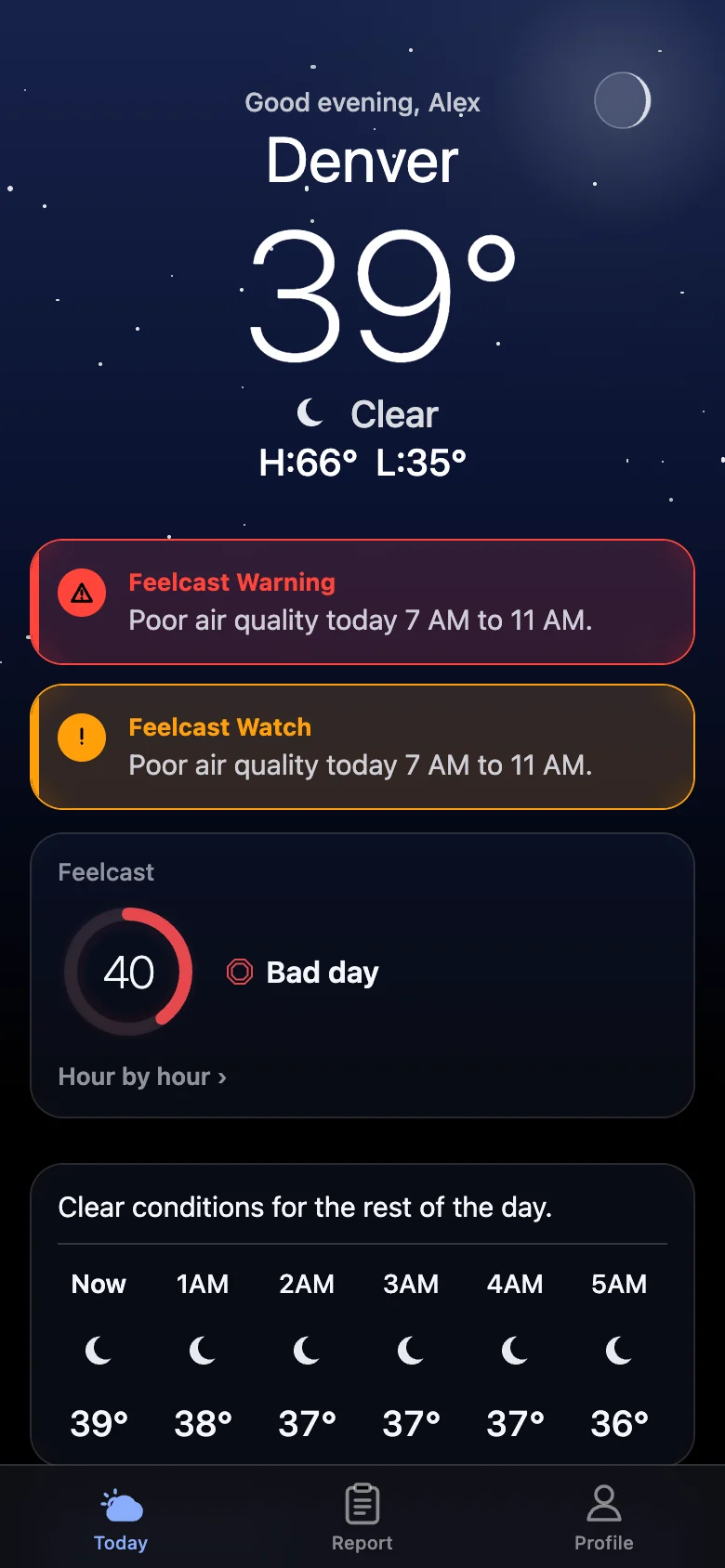
Pollen rides on warm, windy days, and thunderstorms can stir it up. Feelcaster tracks tree, grass and weed pollen alongside air quality and storms.
Get early accessWhat Feelcaster watches for allergies
Strongest first. You choose which triggers apply to you in the app.
Pollen
Tree, grass and weed pollen, carried further on windy days. Starts to count at: Moderate pollen and above.
Air quality
Smoke, smog and fine particles. Starts to count at: A US Air Quality Index above 50, strongest past 100.
Pressure swings
Air pressure rising or falling fast, usually around a passing front or storm. Starts to count at: A swing of about 6 hPa within 3 hours, or a clear shift from the day before.
Thunderstorms
Thunderstorms, and air that is primed for them. High pollen makes them count for more. Starts to count at: Thunderstorms in the forecast.
One thing to do on those days
On high pollen days keep windows shut, shower after time outside and wear sunglasses on windy walks.
Allergies: questions people ask
Which pollen does Feelcaster track?
Tree, grass and weed pollen, from Open-Meteo and Google’s pollen data. Windy days carry it further, so Feelcaster counts wind in.
Why do thunderstorms matter for allergies?
Storm winds and rain can stir up pollen and break it into smaller particles, which some people feel more. Feelcaster counts storms for more when pollen is high.
Other conditions

Know before the weather does.
Feelcaster is coming to iPhone and Android. Join early access and we’ll send your invite.