
Migraine and the weather
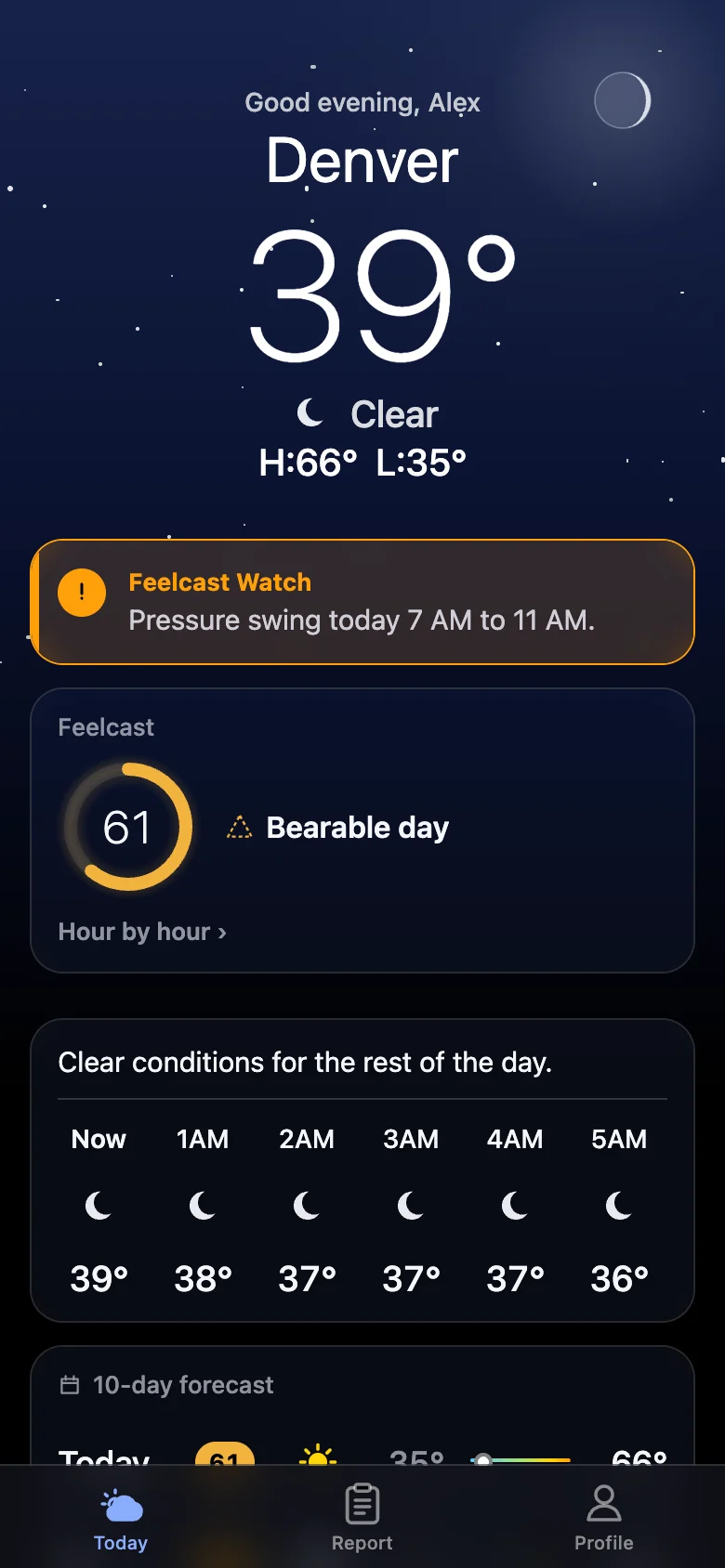
Many people with migraine notice attacks around storms, heat and fast pressure changes. Feelcaster watches how fast the pressure is moving where you are, hour by hour, and tells you before a swing.
Get early accessWhat Feelcaster watches for migraine
Strongest first. You choose which triggers apply to you in the app.
Pressure swings
Air pressure rising or falling fast, usually around a passing front or storm. Starts to count at: A swing of about 6 hPa within 3 hours, or a clear shift from the day before.
Heat
Hot afternoons, high feels-like temperatures and warm nights. Starts to count at: A feels-like temperature from 80°F, strongest near 103°F.
Thunderstorms
Thunderstorms, and air that is primed for them. High pollen makes them count for more. Starts to count at: Thunderstorms in the forecast.
Air quality
Smoke, smog and fine particles. Starts to count at: A US Air Quality Index above 50, strongest past 100.
One thing to do on those days
On a day with a pressure swing, drink water early, keep your usual routine on schedule and plan something lighter for the afternoon.
Migraine: questions people ask
Can the weather trigger a migraine?
Research is mixed. Some studies link falling pressure, storms and heat to more migraine days for some people. Many people with migraine name weather as one of their triggers, and your own logs show whether it holds for you.
How much warning will I get?
A Feelcast Warning means a rough stretch is likely within the next 12 hours. A Feelcast Watch means one is possible within the next 2 days. Quiet hours, 10 PM to 7 AM, hold both back.
Does Feelcaster cover other kinds of headache?
Yes. You can watch for migraine with aura, vestibular migraine, cluster headaches, tension headaches and sinus headaches, each with its own alert.

Know before the weather does.
Feelcaster is coming to iPhone and Android. Join early access and we’ll send your invite.